A Look Back at 30 Years of Unimaginable Change
This is the story of the numbers and, more importantly, the story behind the numbers that forever transformed the City of Good Living.
A young couple closed on their first home in San Carlos in 1996 for $385,000. They took out a 30-year mortgage on the property and will make their final payment in January of 2026. Now, imagine telling that same couple in 1996 that on the day their mortgage is paid off in 2026, their home will be worth seven times what they paid for it, nearly $3,000,000. Just how insane is this notion? It would be the same as telling your average home buyer in San Carlos today that in 30 years their home will be worth $20,000,000. Seem impossible? It wasn’t then and if history is any indication, it could happen again.
The Last 30 Years of Residential Real Estate Growth Appear in 4 Distinct Time Periods -
Period 1: The Right Place at the Right Time
The explosion of San Carlos property values and sustained 30-year rise is linked to three key events all converging at the same time in the late 1990s, which saw San Carlos property values rise 60% by the year 2000.
Silicon Valley’s Rise to Prominence
The Peninsula and South Bay combined the power of local venture capital with the ingenuity and entrepreneurship of some of the best and brightest minds of our lifetime. The result is complete and total dominance as the Valley cements its claim as the undisputed tech capital of the world.
In 1996, Bill Clinton was just starting his second term. The United States was safely out of the early 90s recession and more importantly for San Carlos, Netscape had just launched what is widely considered to be the first, large Silicon Valley IPO. The stage was set for a massive hiring bonanza as the dot-com surge was underway. By the late 90's Yahoo, E-Trade, Amazon, eBay and countless others were all slated for their IPOs. For the first time, San Carlos started to feel the pressure of an increased buyer pool, due solely to new tech hires. The Peninsula was, and remains today, the preferred place to live in the Bay Area for those involved in technology. As you can see from the chart on the following page, 1998 and 1999 combined had 838 sales of single-family residences. Compare that to a combined 432 sales for all of 2024 and 2025. Additionally, as you will see from the chart, prices on a single-family residence in San Carlos rose by 36% between 1998-2000.
California’s Introduction of the Academic Performance Index (API)
For the first time ever in California, hard data is released on public schools allowing for transparency and objective scoring of public schools. In 1999, California introduced the Academic Performance Index which was the first time that widely available rankings and metrics were synthesized into several categories that measured every school’s performance against all other schools. Schools were given an overall index score between 200-1000 and then a school ranking of 1-10, with 1000 and 10 being the highest possible scores to achieve. It was the first time that the public could objectively view the performance of a prospective school. As you may have already guessed, when the curtain was pulled back in 1999 and the APIs were released, San Carlos elementary schools scored high across the board.
The assigned public schools always play a material role in property values. However,
when the buying public is made up primarily of highly educated tech employees who place a premium on public education, the demand goes up exponentially. San Carlos had the high performing schools and was in the right place at the right time.
when the buying public is made up primarily of highly educated tech employees who place a premium on public education, the demand goes up exponentially. San Carlos had the high performing schools and was in the right place at the right time.
Downtown San Carlos Meets the Moment
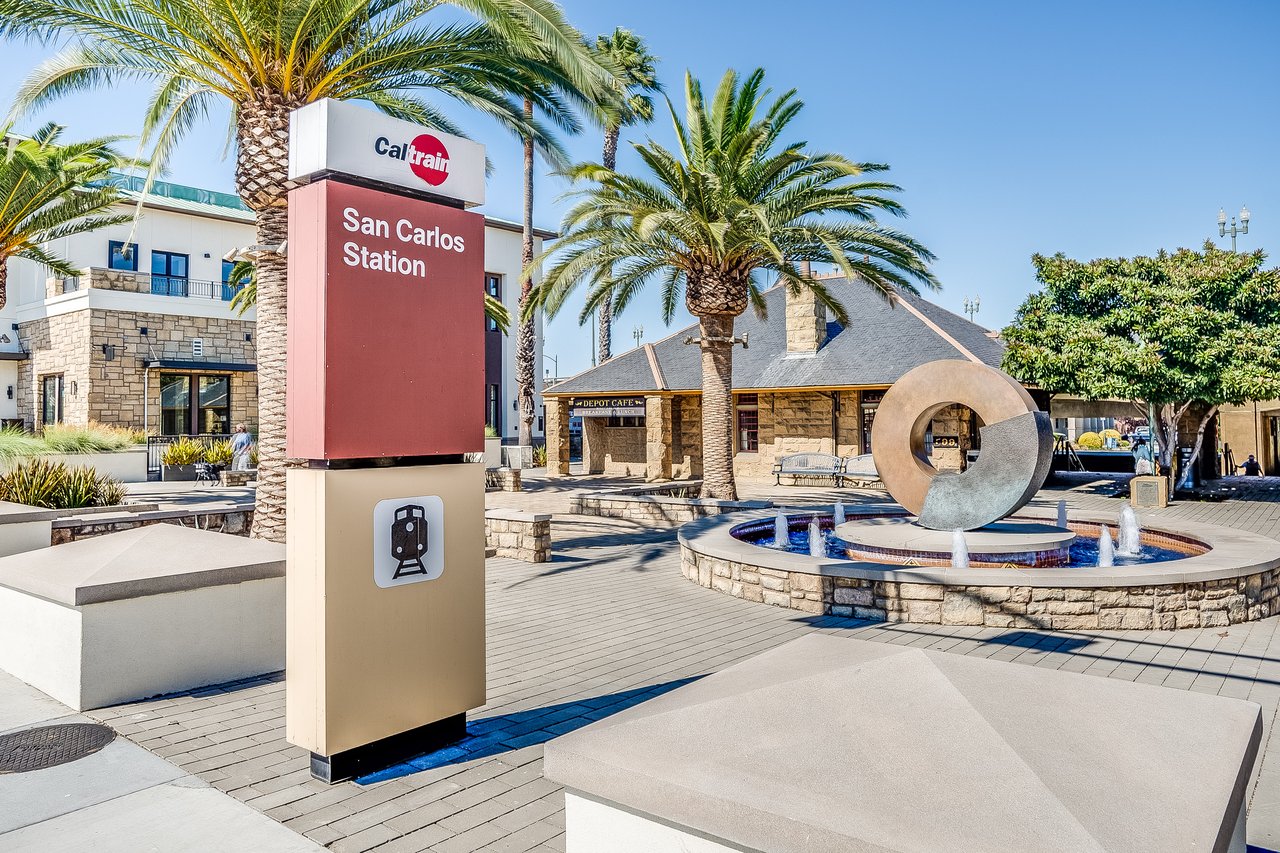
Under the steady hand of a very thoughtful City Council and Planning Commission, San Carlos avoided the pitfalls of growing too fast and stayed focused on keeping the hometown character of downtown San Carlos, and transformed itself into a revitalized downtown and destination for not only those that live here, but for those from surrounding towns as well.
Prior to the 1990s, you could shoot off a cannon downtown on a Friday evening after 5:00 pm and not a soul would hear it. By the mid 1990s, sleepy San Carlos was slowly making the transformation to the town we know today.
Substantial changes to the area surrounding downtown were the first to turn. Newer multi-family buildings were constructed nearby. The new San Carlos Library and Youth Center were both built in 1999. A Tavola restaurant, which would later become Town, headlined on Laurel Street. More and more merchants and restaurants were willing to gamble on Laurel Street. The demographics of San Carlos were changing as well. For the first time in many years the town was getting younger. Anchored by an influx of new tech workers and their young families, the demand for a livelier downtown was obvious. By 2005, downtown San Carlos would be completely transformed.
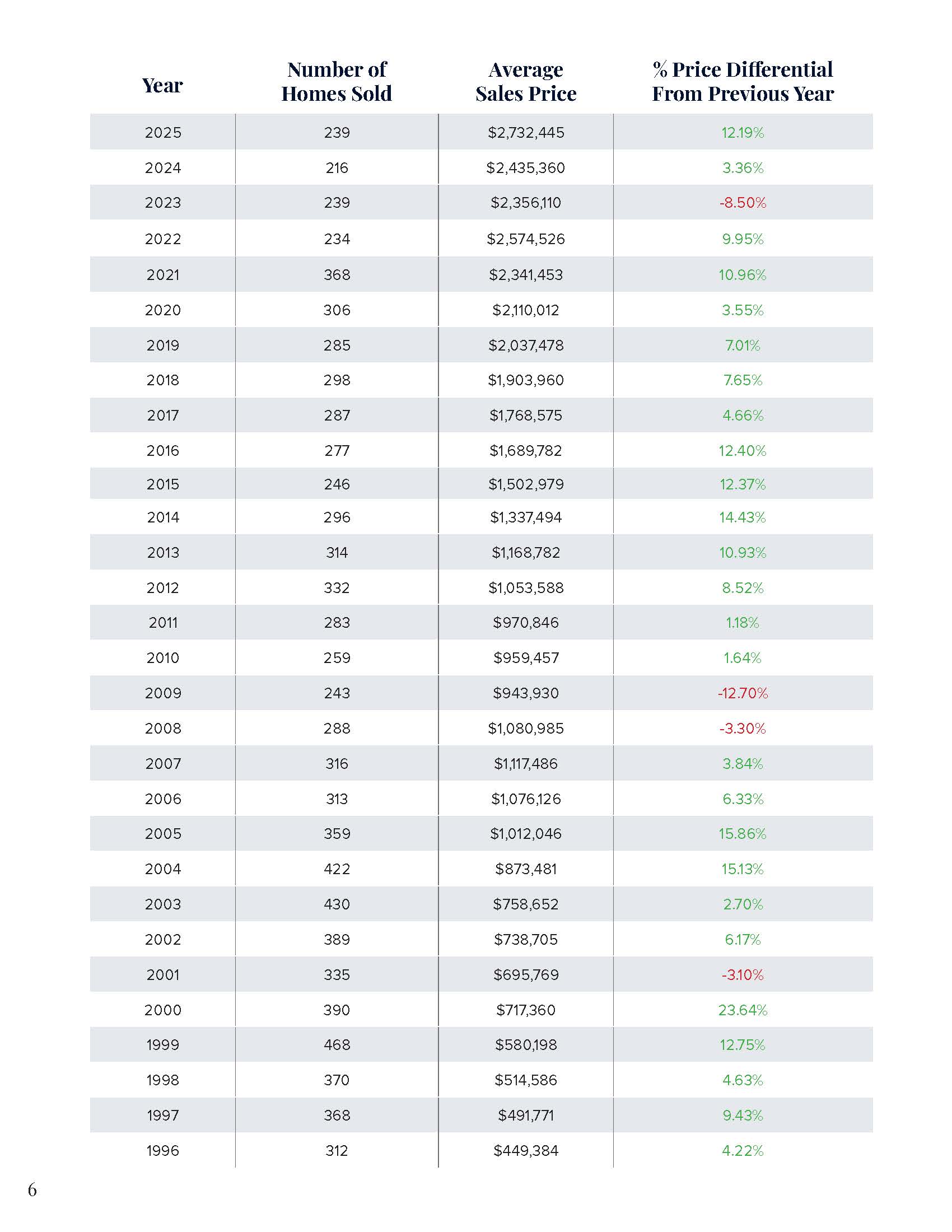
Period 2: The Early 2000s: Between 2001-2007 San Carlos Property Values Rise another 60%
After briefly clearing a very minor dot-com bust in the San Carlos housing market, property values were once again shot into the stratosphere, rising nearly 60% in value from 2001-2007. Interest rates remained reasonable, San Carlos schools continued to build on their already stellar reputation, downtown San Carlos began to resemble the same downtown we know today and Silicon Valley began its next round of massive IPOs, including Google, Netflix and Salesforce.
This additional 60% surge was aided by the sale of 852 single-family residences between 2003 and 2004, which is an MLS (Multiple Listing Services) record. Property values in San Carlos went up 116% in just ten years, from 1997-2007.
Period 3: The Great Recession: 2008-2011 San Carlos Property Values Decline by 16%
The capsizing of Wall Street and the mortgage meltdown of 2008 led the United States into the Great Recession. San Carlos property values were not immune from the issues facing the country. San Carlos property values lost approximately 16% of their value between 2008-2010. Not a terrible tradeoff considering the previous 10 years’ gains of 60%, but nonetheless San Carlos took a hit.
There is an old saying for those investing in Peninsula real estate: “San Mateo County is the last one into a recession and the first one to bounce out of it.” That sentiment held true once again and San Carlos rebounded in 2011. By 2011, Silicon Valley had weathered the recession and was starting to put some heavy hitters in play. Companies releasing IPOs around this time included Tesla, Facebook, LinkedIn and Palo Alto Networks. All of these companies were large suppliers of buyers looking in San Carlos and they remain here today, 15 years later.
Period 4: The Golden Age of San Carlos Real Estate 2012-2025
Absent a brief hiccup in the market in 2023, from 2012-2025 San Carlos experienced 14 consecutive years of year-after-year gains in the market. Within this 14-year stretch, San Carlos property values went up 152%
A sizeable portion of this massive increase took place in the wake of COVID-19. The gains and factors that surrounded the COVID-19 bump in San Carlos property values will go down as a once-in-a-lifetime market for San Carlos. It was the perfect confluence of rock-bottom interest rates, extremely low inventory and a buyer demand for single-family residences during the pandemic that will likely never be replicated. All three of these occurring at the exact same moment in time was unlike anything San Carlos had experienced before.
Year 31 and Beyond
Whether this historic climb in property values will continue is unknown, but I believe there are clues. Look carefully at the number of homes sold each year from 2022-2025 (928). The number of homes sold over this 4-year period is a record low for the MLS. Even the 4-year period spanning the entire length of the Great Recession saw more homes sold in San Carlos (1,073). Extremely low inventory has been the one steady pillar to hold up our market and I believe it will continue to do so.
The bottom line is that many current San Carlos homeowners are not anxious to sell anytime soon. One of the primary reasons: capital gains. In a sense, San Carlos has been a victim of its own success. The historic surge in property values has pushed most homes beyond their gain exemptions and into long term capital gains treatment for their prospective sales. In some cases, the taxes are massive. Some that would normally sell and move out of San Carlos, are instead electing to stay to avoid paying the taxes, and passing the complete gain on through an inheritance.
To further illustrate this point, let’s revisit our couple that will pay off their 30-year mortgage in January of 2026.
Acquisition Price in 1996 - $385,000
Improvements/Remodeling - $500,000
Married Exemption - $500,000
Total Basis - $1,385,000
Improvements/Remodeling - $500,000
Married Exemption - $500,000
Total Basis - $1,385,000
Sales Price in 2026 - $2,800,000
Total Basis - $1,385,000
Total Basis - $1,385,000
Total Amount Subject to Capital Gains: $1,415,000
Capital Gains Due on the Sale is equal to $1,415,000 x .33% = $466,950
This example illustrates the point of why so many San Carlos would-be home sellers are reconsidering the sale of their home. Expect this topic and analysis to be front and center as we make our way into the next five years of home sales. The net result will be fewer and fewer San Carlos homes coming on the market, resulting in continued pressure on escalating values.