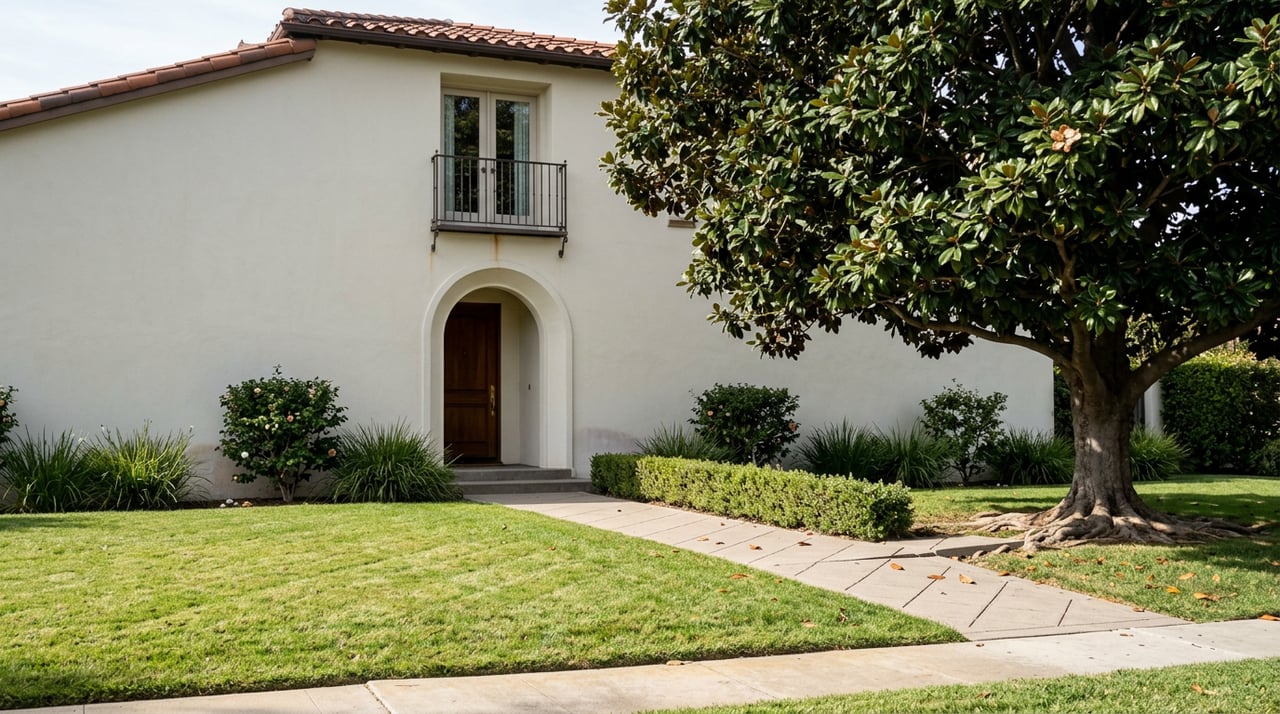
A four-inch cast iron pipe runs from the crawl space of most San Carlos homes out to the street, buried under the same lawn, driveway, or flagstone path that's been there since the house went up. Nobody sees it. Nobody thinks about it. And sewer lateral rules can matter when a San Mateo County home sells.
San Carlos is one of the exceptions. If you're getting ready to list a home here, especially one from the postwar wave of construction that shaped most of the city's neighborhoods, that exception is worth understanding before your buyer's inspector finds it for you.
What the ordinance actually says
San Carlos does regulate sewer laterals. Chapter 13.05 of the municipal code is on the books and it's specific about when an inspection is required: when you apply for a new sewer connection, when you pull a qualifying building permit for an improvement, when the city is repairing or replacing the sewer main your lateral connects to, during main-line smoke testing, or after a sanitary sewer overflow traced to a blocked lower lateral.
Read that list again. A home sale isn't on it.
A July 2025 compliance table compiled by HomeGuard and cited by Otter Squad, a licensed plumbing contractor that inspects and repairs laterals across the county, spells out the practical effect: San Carlos's ordinance triggers an inspection when a remodel permit exceeds $75,000 or when a project adds toilets, unless a valid certificate is already on file. Selling the house by itself does neither.
That single distinction separates San Carlos from most of its neighbors. As of 2026, seven San Mateo County cities, San Mateo, Burlingame, Hillsborough, San Bruno, Millbrae, Pacifica, and South San Francisco, require a passing lateral inspection and a compliance certificate before escrow can close. Belmont and Brisbane, like San Carlos, do not require one automatically at sale. Redwood City's status is genuinely unresolved between sources, which matters if you're weighing a move across that particular border.
| City | Required at sale | Trigger instead |
|---|---|---|
| San Mateo, Burlingame, Hillsborough, San Bruno, Millbrae, Pacifica, South San Francisco | Yes | Point of sale |
| San Carlos | No | Remodel permit over $75,000, or adding toilets |
| Belmont | No | Remodel over $50,000, disclosure required at sale |
| Brisbane | No | Remodel or water meter change, disclosure required at every transfer |
| Redwood City | Unresolved | Confirm directly with the city |
The gap didn't happen by accident
San Carlos didn't skip a point-of-sale rule because nobody proposed one. In 2010, the city considered exactly that, an ordinance that would have put the burden of proving a working lateral on the seller, the same model neighboring cities eventually adopted. Local realtors and the City Council itself pushed back, and the point-of-sale version never passed.
The city had its own numbers driving the conversation. Public records from that period showed San Carlos was logging dozens of sanitary sewer overflows a year in the late 2000s, a mix of main-line and lateral failures, enough that the city was operating under a federal consent decree requiring the number down to a handful annually within a few years. The response the council chose wasn't to shift the cost onto sellers at the moment of transfer. It was to have Public Works pursue its own sewer master plan and address the system on a broader timeline.
That's a defensible policy choice. It is not, however, a signal that San Carlos laterals are somehow less likely to have problems than the ones forty feet away in Belmont or across the tracks in San Mateo. The pipe doesn't know which city it's in.
What that means for a house built in the 1940s or 1950s
Much of San Carlos's housing stock dates to the postwar building boom of the 1940s and 1950s, the same era that put a lot of cast iron in the ground across the Peninsula. Cast iron corrodes from both the inside and the outside over decades, and once a section starts to fail, the fix usually means trenching, which tends to run under whatever landscaping or driveway happens to sit on top of it.
Because there's no city mandate forcing that discovery before you list, the first time many San Carlos sellers learn about a lateral problem is when their buyer's own inspector orders a camera scope during the contingency period. Nothing in San Carlos's code stops a buyer from requesting one. Absence of a city requirement just means the timing of that discovery is entirely up to the other side of the transaction, and it typically happens after you're already in contract, not before.
That timing matters more in a market that moves the way San Carlos does right now. Homes here have been selling in an average of about 12 days over the three months ending in May 2026, according to Redfin's city-level data, with a median sale price of $2.7 million over that same window, up 10.8 percent year over year. A market with that little slack doesn't leave much room to absorb a surprise mid-escrow. A lateral issue discovered on day nine of a ten-day contingency period turns into a rushed negotiation instead of a planned repair, and it can cost more in both dollars and goodwill than the same problem addressed calmly before the sign goes up.
Getting ahead of it costs less than getting caught by it
Nothing requires a San Carlos seller to order a lateral inspection before listing. Plenty do anyway, for the same reason sellers order general home inspections and pest reports: it puts you in control of the story instead of reacting to someone else's report.
A video inspection of the lateral, the same closed circuit camera method the county's point-of-sale cities require, typically runs in the range of $300 to $750 depending on the contractor and the length of run. In Burlingame, where the point-of-sale program has been in place since 1986, roughly half of the laterals tested have needed repair or replacement, at a cost of $1,500 to $10,000. San Carlos doesn't publish an equivalent pass-fail rate because it doesn't test laterals at sale, but the pipe itself, and the odds of a problem, are not meaningfully different a few miles up El Camino.
Compare that against what happens when a buyer's inspector finds the same problem after you're in contract. At that point you're negotiating from a weaker position, on someone else's schedule, often with an appraisal timeline and a lender already in motion. A seller who already has a clean scope in hand, or who has already priced a known issue into the listing, controls that conversation instead of being controlled by it.
The city's own Public Works department publishes the engineering standard for a proper lateral installation, including cleanout placement, which is useful reference if a contractor tells you work is needed and you want to confirm the fix meets city specification rather than just clearing the immediate blockage.
Where this fits with the rest of your disclosure packet
A lateral scope isn't a substitute for the disclosures California actually requires. Even so, it's easy to treat the lateral as someone else's problem until a buyer's inspector makes it yours.
If you want the fuller picture of how San Carlos's market has been moving this year, from listing volume to price per square foot by tier, I've laid that out in my San Carlos single family market trends guide.
A few questions I get on this
Does San Carlos require a sewer lateral certificate to sell a house? No. The city's ordinance triggers inspection on a remodel permit over $75,000 or when adding toilets, not automatically at sale.
Can a buyer still ask for a lateral inspection even though the city doesn't require one? Yes. Nothing in San Carlos's code prevents a buyer from ordering a camera inspection during their contingency period, and many do, particularly on older homes.
If I get a pre-listing inspection, is it the same as the compliance certificate other cities issue? Not officially. San Carlos doesn't issue that certificate for a sale.
What does a lateral repair typically cost if a scope finds a problem? In Burlingame's long-running program, repair or replacement has commonly run $1,500 to $10,000, depending on the length of pipe involved and what sits above it. San Carlos doesn't track this at sale, so there's no local pass-fail rate to compare it against.
If you're weighing whether to get ahead of this before you list, or you'd rather talk through your specific street and its history with the city's sewer system, Call Bob. Years of San Carlos transactions mean I've usually already seen what your inspector is about to find.
This article is general information, not legal, tax or financial advice. Consult a qualified professional about your situation.