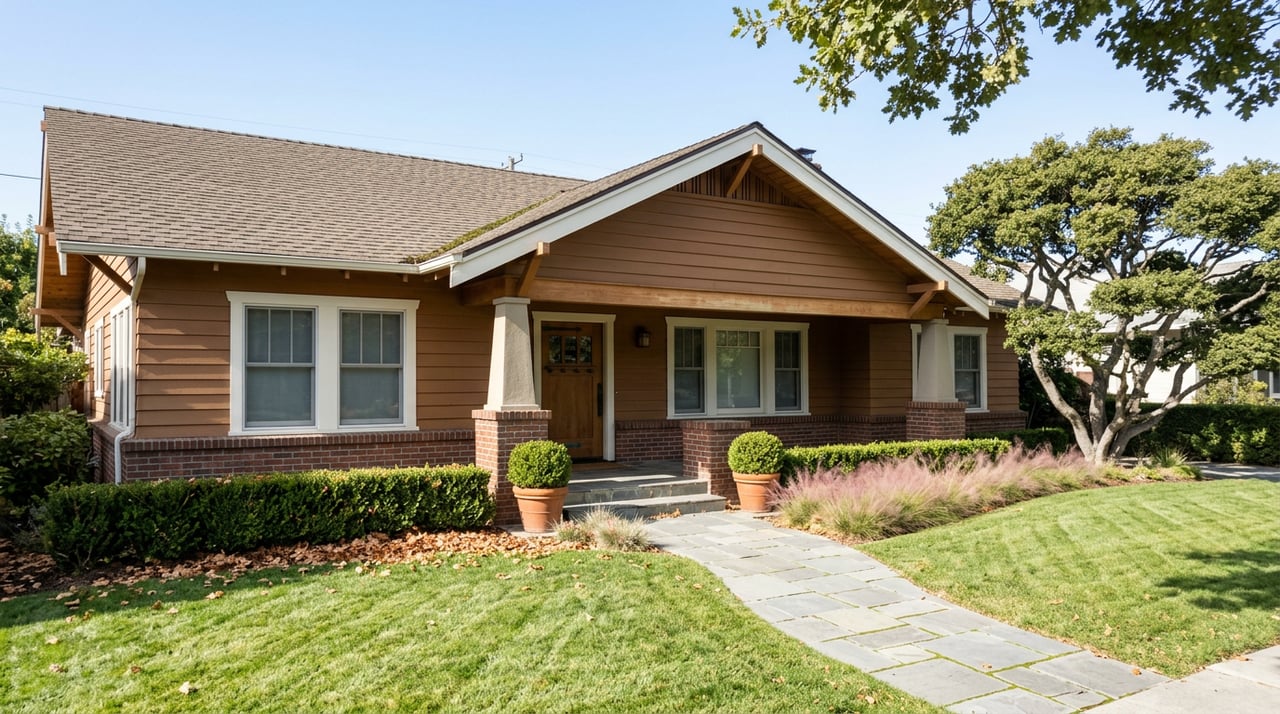
Back in October 2008, I wrote a post comparing two San Carlos neighborhoods and got more angry emails than almost anything else I'd published to that point. I disclosed upfront that I lived on a small street in Howard Park, ran the numbers anyway, and found that Howard Park had pulled ahead of White Oaks in both average sale price and price per square foot over the prior twelve months. Readers pushed back hard. One argued it was a fluke caused by a handful of heavy-hitting streets. Another asked which neighborhood might be next to catch up. I answered every comment myself, because that's what you do when you've just told half your readership their favorite neighborhood isn't the one on top anymore.
Eighteen years later, I still get some version of that same pushback whenever a buyer tells me they assume White Oaks is San Carlos's most expensive neighborhood. It isn't, and hasn't been for a long time. Understanding why matters more now than it did in 2008, because Howard Park has held the price-per-square-foot lead since around 2010, even though the latest figures don't offer a like-for-like measure of how the gap has changed.
The Assumption Everyone Still Makes
White Oaks earned its reputation honestly. The neighborhood, also known as El Sereno Corte, sits south of Belmont Avenue and is anchored by White Oaks Elementary, a school that has carried a strong reputation for decades. For years, buyers paid a real premium just to land inside that attendance boundary, regardless of house size. That history is why White Oaks still comes up first in almost any conversation about San Carlos's priciest streets.
But reputation and current pricing are two different things, and the gap between them is exactly what a buyer or seller needs to understand before they anchor a budget or a listing strategy to a name instead of a number.
What the Numbers Actually Say in 2026
Howard Park's sold data through March 2026 put the median sale price at $2.6 million, up 10.8 percent from the same month a year earlier, with a median price per square foot near $1,400, up 21.1 percent year over year. Homes were averaging just 8 days on market, down from 11 the year before, on a small but consistent handful of monthly sales.
White Oaks listings from an August 2026 snapshot showed a median list price of $2.799 million and an average price per square foot of $1,319.74, with homes sitting for an average of 24 days. That's a smaller, thinner slice of the market to draw conclusions from, and list price isn't the same measurement as sold price, so I want to be honest about comparing two different things here.
Here's how the two neighborhoods stack up against each other and against the city as a whole:
| Metric | Howard Park (sold, Mar 2026) | White Oaks (active listings, Aug 2026) | San Carlos citywide (sold, 3 mos. ending May 2026) |
|---|---|---|---|
| Price | $2.6M median | $2.799M median list | $2.7M median |
| Price per sq. ft. | ~$1,400 | $1,319.74 | $1,440 |
| Days on market | 8 (avg) | 24 (avg) | 12 (avg) |
| YoY price/sq. ft. growth | +21.1% | not directly comparable | +6.6% |
The single most telling line in that table isn't the price per square foot gap itself. It's the growth rate. Howard Park's reported price-per-square-foot growth rate is more than three times the citywide rate shown in the table, although the figures use different reporting periods, so that comparison alone doesn't establish whether Howard Park is pulling further away from the citywide market or from White Oaks.
The longer-term neighborhood story is consistent with what I first flagged in 2008 and with what most local agents have quietly accepted since around 2010, when Howard Park overtook White Oaks as the neighborhood commanding the highest price per square foot in San Carlos. The 2008 numbers I pulled showed Howard Park at an average of $703.44 per square foot against $667.04 in White Oaks, with Howard Park's average lot size running noticeably larger too, at 7,186 square feet compared to 5,646. Buyers weren't just paying more per square foot in Howard Park that year. They were getting more land underneath it.
Why Concrete Comes Before Curriculum
The mechanism behind this isn't complicated once you walk both neighborhoods rather than just comparing school boundaries on a map. Howard Park sits directly against the north stretch of Laurel Street, San Carlos's downtown corridor. From most Howard Park addresses, you can walk to a produce-forward grocery store like Bianchini's Market, grab dinner at a Greek spot like Pylos or an Irish pub like Molly O's, pick up tacos at La Corneta, and still make the San Carlos Caltrain station without ever getting in a car. White Oaks sits a bit further from that same corridor. The walk to downtown is longer, and for a lot of buyers today, particularly dual-income households who work remote or hybrid schedules, that walk is the whole ballgame.
School assignment still matters to plenty of families, and Howard Park's Brittan Acres Elementary carries its own strong reputation, feeding into Central Middle and Sequoia High just as White Oaks does. But the price data suggests that when buyers are choosing between a slightly better school boundary and a five-minute-shorter walk to a bustling downtown, more of them are choosing the walk. That's the trade nobody explains when they tell you White Oaks is the pricier neighborhood. They're pricing the school. The market is pricing the sidewalk.
The Park With a Law Against Baseball
Howard Park's edge isn't only about proximity to restaurants. It's the oldest platted neighborhood in San Carlos, laid out by the San Carlos Park Syndicate under Frederick Drake, often called the father of San Carlos. The city's very first schoolhouse went up here in 1918, on a site at 650 Elm Street that's now San Carlos City Hall.
Burton Park sits inside Howard Park's boundaries and is the oldest park in San Carlos, on land the city purchased in 1936 and financed with a 20-year bond floated in 1938. The original purchase agreement actually barred baseball from being played on the site. The San Carlos Men's Athletic Club successfully fought to have that clause waived, and the city returned the favor by naming the park after the club's president and longtime city councilman, Edward Burton Sr. Every summer softball game and Little League practice at Burton Park today is happening on ground that once legally forbade the sport.
Every Christmas, Eucalyptus Avenue in Howard Park turns into what locals have called Christmas Tree Lane for more than fifty years, with entire blocks of coordinated light displays that draw visitors from well outside the neighborhood. None of this shows up in a Redfin comp sheet. All of it shows up in what buyers are willing to pay per square foot.
What This Means If You're Comparing the Two
If you're a buyer weighing Howard Park against White Oaks purely on budget, know that Howard Park will generally cost more per square foot for a comparable home, and that it has held the lead since around 2010, though the figures here don't show whether the gap has been growing or closing. Lot size can cut either way depending on which streets you're comparing, but White Oaks' larger residences tend to cluster toward its southern border, so don't assume the priciest neighborhood automatically comes with the biggest yard.
If you're a seller in either neighborhood, the lesson isn't that one neighborhood beats the other. It's that pricing off a citywide median, or off a neighborhood's reputation rather than its recent sold data, will put you in the wrong ballpark before your home ever hits the market. Both neighborhoods reward accurate, recent comps. Neither rewards guessing.
A Few Questions I Get on This
Is White Oaks still a strong investment even if it's not the priciest neighborhood anymore? Yes. White Oaks continues to see strong buyer demand and consistent appreciation. It simply isn't the price-per-square-foot leader it's often assumed to be.
Could White Oaks retake the lead? It's possible if the mix of homes selling there shifts toward larger, more heavily renovated properties, since price per square foot is sensitive to what's actually changing hands in a given month. Nothing in the current data points that direction yet.
Does this affect how I should think about resale value? Both neighborhoods have shown strong resale performance for years. The difference matters more when you're setting an initial budget or listing price than when you're forecasting a decade out.
I've been tracking these two neighborhoods against each other since 2008, and the story has held remarkably steady. If you're trying to figure out which San Carlos neighborhood actually fits your budget, your commute, and the kind of Friday night you want to walk into, I'd rather run the current numbers with you directly than have you guess based on a reputation that's eighteen years out of date. Call Bob and let's look at what's actually selling on the specific streets you're considering.