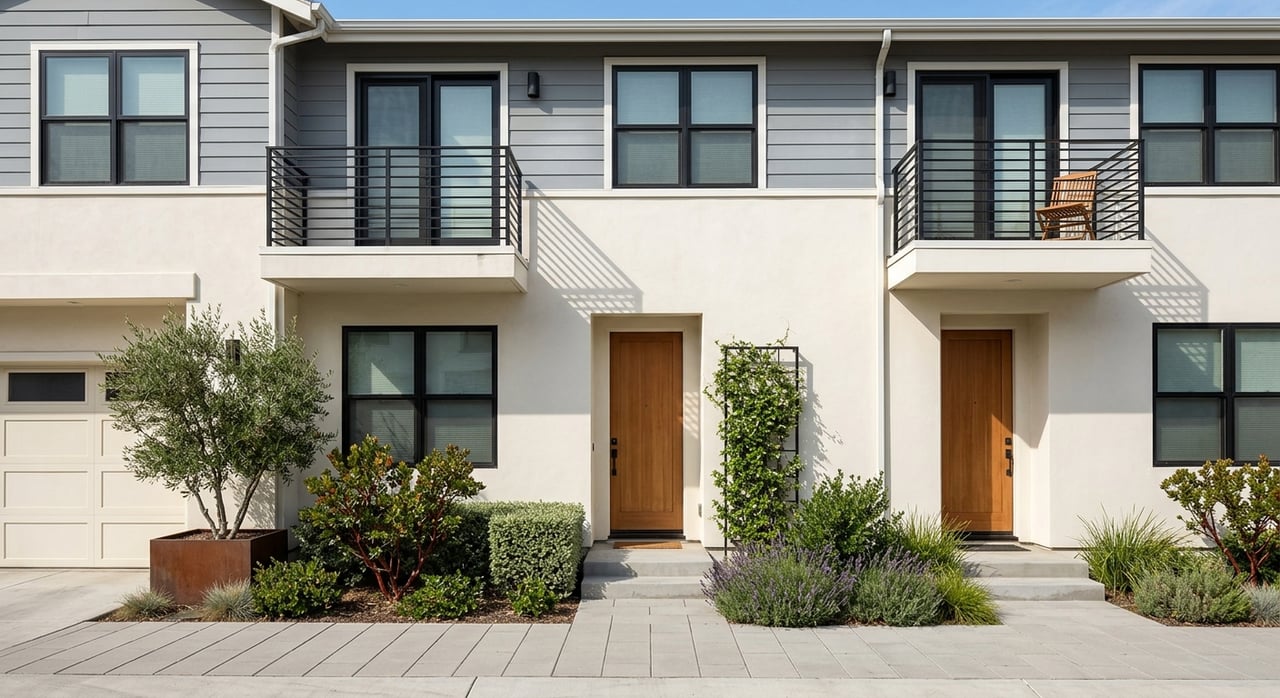
If you have been priced out of San Carlos single-family homes, or you simply do not want the upkeep that comes with a larger property, condo and townhome living can be a smart path to consider. In a market where the median sale price has been about $2.7 million and homes have been moving quickly, attached housing often gives you more ways to enter the market, stay close to downtown, or simplify daily life. The key is knowing how San Carlos attached homes actually vary by location, layout, price, and HOA structure. Let’s dive in.
Where attached homes are in San Carlos
In San Carlos, condos and townhomes are not spread evenly across the city. Based on city planning documents and the current listing mix, most attached housing is concentrated in downtown and along key corridors such as Laurel Street, El Camino Real, Old County Road, and San Carlos Avenue.
Downtown San Carlos generally includes Laurel Street, El Camino Real, and cross streets from Holly Street to Greenwood Avenue. City planning documents highlight this area for pedestrian access, bike access, and transit connections, with the San Carlos Caltrain station and Transit Center serving as major local assets.
The El Camino Real corridor has historically been more auto-oriented, but city planning materials note that recent development has pushed it toward a more transit-oriented and multimodal pattern. That helps explain why many of the newer condo projects and attached-home opportunities are found near downtown and station-adjacent areas.
Outside the core, you will also find a smaller number of hillside and edge-of-town townhome or condo communities. These can feel very different from downtown buildings, often offering more space, more separation, and a more amenity-driven setup.
How condos and townhomes differ
Attached housing in San Carlos covers a wide range. A one-level downtown condo and a three-story townhome near Laurel Street may both be attached homes, but they can live very differently day to day.
Downtown condos
Older downtown condos often provide the most accessible entry point. These homes tend to be one-level units with one or two bedrooms, plus features like balconies or patios, parking, storage, and sometimes shared amenities such as a pool.
Current examples show that range clearly. A one-bedroom unit at 775 Chestnut Street was listed at $799,000 with a pool, covered parking, in-unit laundry, and a private deck, while a two-bedroom unit at 728 Elm Street was listed at $745,000 with a pool and extra storage.
If your priority is being close to restaurants, services, and transit, these buildings can check a lot of boxes. The tradeoff is usually less interior space and little to no private outdoor yard area.
Townhome-style condos
Townhome-style condos in San Carlos usually feel more like a traditional house in their layout. Many are two or three stories with two or three bedrooms, about 2.5 baths, and attached garages.
A current example is 656 Cedar Street #3, a 1,440-square-foot townhouse-style condo listed at $1.15 million with two parking spaces. In newer projects, the finish level and design can push these homes closer to single-family living, especially when they include private garages, newer systems, and more separation between living and bedroom spaces.
For example, 1044 Laurel Street sold for $2.35 million and was described as a three-story home with a private two-car garage, solar, EV charging, glass balconies, community outdoor space, and digital home automation. That is a very different product from an older one-bedroom condo, even though both fall under attached housing.
Newer transit-adjacent condos
Newer buildings near El Camino Real and the station often focus on flexible layouts and convenience. You may see split-bedroom floor plans, bonus rooms, and design choices aimed at buyers who want less maintenance without giving up function.
One example is 560 El Camino Real #207, a newly completed two-bedroom, 2.5-bath condo of about 1,425 square feet. It features a bonus room off the kitchen and bedrooms on opposite sides, with pricing around the mid-$1.4 million to $1.62 million range depending on unit.
These homes may appeal to buyers who want newer construction and a location that supports commuting, dining, and daily errands. The tradeoff is that newer product often comes with a higher purchase price and monthly HOA dues.
Hillside and edge-of-town communities
Some attached-home communities in San Carlos feel less urban and more like residential enclaves. In hillside or edge-of-town settings, you may find larger floor plans, views, and broader amenity packages.
For example, a condo at 3374 Brittan Avenue was marketed with pool views, swimming pools, tennis courts, and a clubhouse. In the Portofino area, a townhouse at 438 Portofino Drive offered about 2,113 square feet, canyon and bay views, a two-car garage, and bedrooms on one level.
If you want more space or a more secluded feel, these communities can be worth a look. But they also show why it is important not to treat all condos and townhomes as the same category.
What attached homes cost in San Carlos
One of the biggest misunderstandings I see is the idea that condos are always inexpensive and townhomes are always the middle ground. In San Carlos, the pricing spread is much wider than that.
The citywide median sale price has recently been about $2.7 million, which keeps attached housing relevant for many buyers. But attached homes here still range from entry-level by local standards to pricing that overlaps with some single-family options in nearby areas.
Recent examples include:
- A one-bedroom condo at 1701 San Carlos Avenue #2 that sold for $595,000
- A one-bedroom condo at 775 Chestnut Street #7 listed at $799,000
- A two-bedroom condo at 728 Elm Street #205 listed at $745,000
- A two-bedroom condo at 1001 Laurel Street #316 listed at $1.065 million
- A two-bedroom, 2.5-bath townhouse-style condo at 656 Cedar Street #3 listed at $1.15 million
- A newer two-bedroom, 2.5-bath condo at 560 El Camino Real #207 listed at $1.62 million
- A newer Laurel Street townhome at 1044 Laurel Street that sold for $2.35 million
The takeaway is simple. In San Carlos, price depends heavily on location, building age, square footage, parking, amenities, views, and whether the home offers easy access to downtown and Caltrain.
Why HOA details matter so much
With condos and townhomes, your purchase is not just about the unit itself. You are also buying into an association structure, and in California that comes with a defined disclosure process.
Before a transfer, the seller must provide key HOA documents that include the governing documents, the latest annual budget report, current assessments and fees, any unpaid amounts, rental restrictions if they exist, and the most recent reserve study report. That information gives you a clearer picture of both monthly cost and long-term building health.
California also requires annual budget reporting and reserve planning. Associations must distribute annual budget reports within a defined timeline, and the board must have a reserve study prepared at least every three years, review it annually, and use it to estimate repair and replacement costs for major components.
There are also limits on how far regular assessments can generally rise year over year without member approval, and special assessments face limits as well. Even so, HOA costs can vary a lot from one San Carlos property to another.
Current local examples show that spread:
- 656 Cedar Street #3 advertised a $375 monthly HOA
- 775 Chestnut Street #7 advertised a $650 monthly HOA
- 3374 Brittan Avenue #13 advertised $1,063 monthly dues
That is why you should never look at the list price alone.
What to review before you buy
In San Carlos, a condo or townhome can absolutely reduce day-to-day maintenance. But lower maintenance does not always mean lower total ownership cost.
Before you move forward, pay close attention to these items:
- Monthly HOA dues
- Reserve funding and reserve study updates
- History of special assessments
- Insurance structure
- Rental restrictions or caps
- Parking and storage rights
- Responsibility for roofs, decks, exterior walls, elevators, and landscaping
These details can affect both your monthly budget and your long-term risk. They also help explain why two homes with similar square footage can feel very different financially.
Who condo or townhome living fits best
For some buyers, attached living in San Carlos is mainly about affordability relative to detached homes. For others, it is about lifestyle.
Downtown and El Camino-area condos may make sense if you want a shorter commute, easier access to the station, or less yard and exterior upkeep. Newer townhomes may work better if you want more privacy, more storage, and a floor plan that feels closer to a house.
Hillside communities can appeal if you want larger spaces or a more amenity-rich setting. The important thing is to match the product type to how you actually live, not just to the label of condo or townhome.
A practical way to think about it
If you are comparing attached homes in San Carlos, think in layers. First, decide which location pattern fits you best: downtown, corridor, or hillside. Then compare layout, building age, garage or parking setup, HOA dues, and how much of your monthly budget goes toward convenience versus square footage.
That framework usually leads to better decisions than asking whether condos are good and townhomes are better. In this market, there is no one-size-fits-all answer.
If you want help sorting through the San Carlos condo and townhome options, I can help you narrow the field based on location, budget, layout, and the HOA details that matter most. You can learn more or reach out through Bob Bredel - Main Site.
FAQs
What areas of San Carlos have the most condos and townhomes?
- Most attached housing is concentrated in downtown San Carlos and along corridors such as Laurel Street, El Camino Real, Old County Road, and San Carlos Avenue, with a smaller number of hillside and edge-of-town communities.
What is the difference between a San Carlos condo and a San Carlos townhome?
- In San Carlos, older condos are often one-level units with one or two bedrooms, while townhome-style homes are usually two or three stories with more separation of space and often attached garages.
What do San Carlos condo HOA fees usually cover?
- Coverage varies by association, so you need to review the documents closely to see who pays for items like roofs, decks, exterior walls, elevators, landscaping, parking areas, and other common components.
How much do condos and townhomes cost in San Carlos?
- Recent examples range from about $595,000 for a one-bedroom condo to more than $2.35 million for a newer downtown townhome, depending on location, size, age, and amenities.
Why are HOA documents important when buying a San Carlos attached home?
- HOA documents help you evaluate dues, reserve funding, assessment history, rental restrictions, and financial health so you can understand the true cost and condition of the property.
Are newer San Carlos townhomes always a better value than older condos?
- Not necessarily, because value depends on your goals, and newer townhomes may offer more space and newer features but can also come with much higher prices and ongoing HOA costs.